01 / Web routes and feature boundariesInspect code ↗
routes/web.phpMaps attendance, permission, employee and reporting endpoints and applies authentication middleware to selected employee routes.
An employee-attendance workflow built in Laravel, connecting check-in/out, employee requests, persistent records and reporting routes.
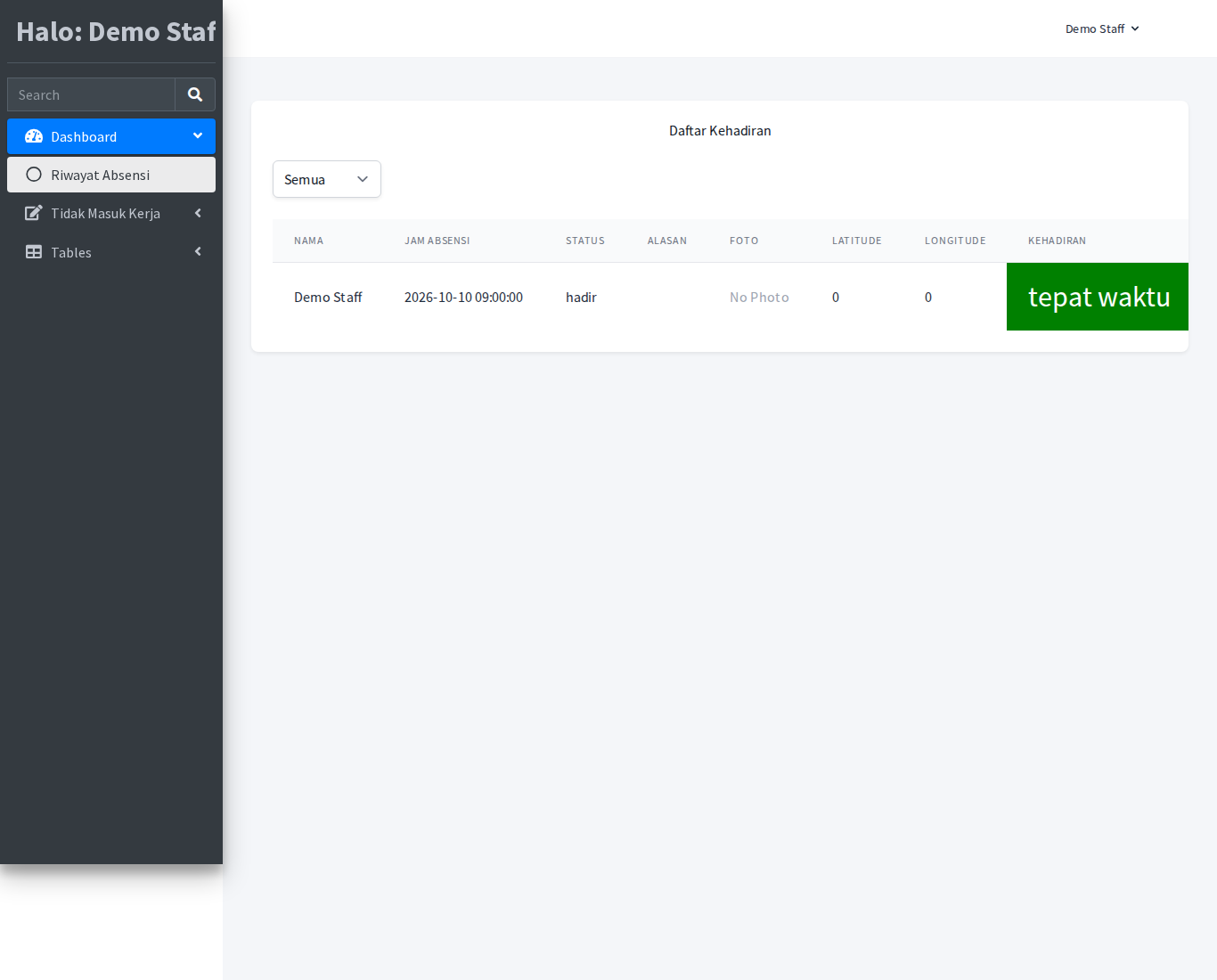
Captured from the original Laravel application after logging in through the real authentication flow. The attendance table uses a synthetic staff member and a temporary SQLite database.
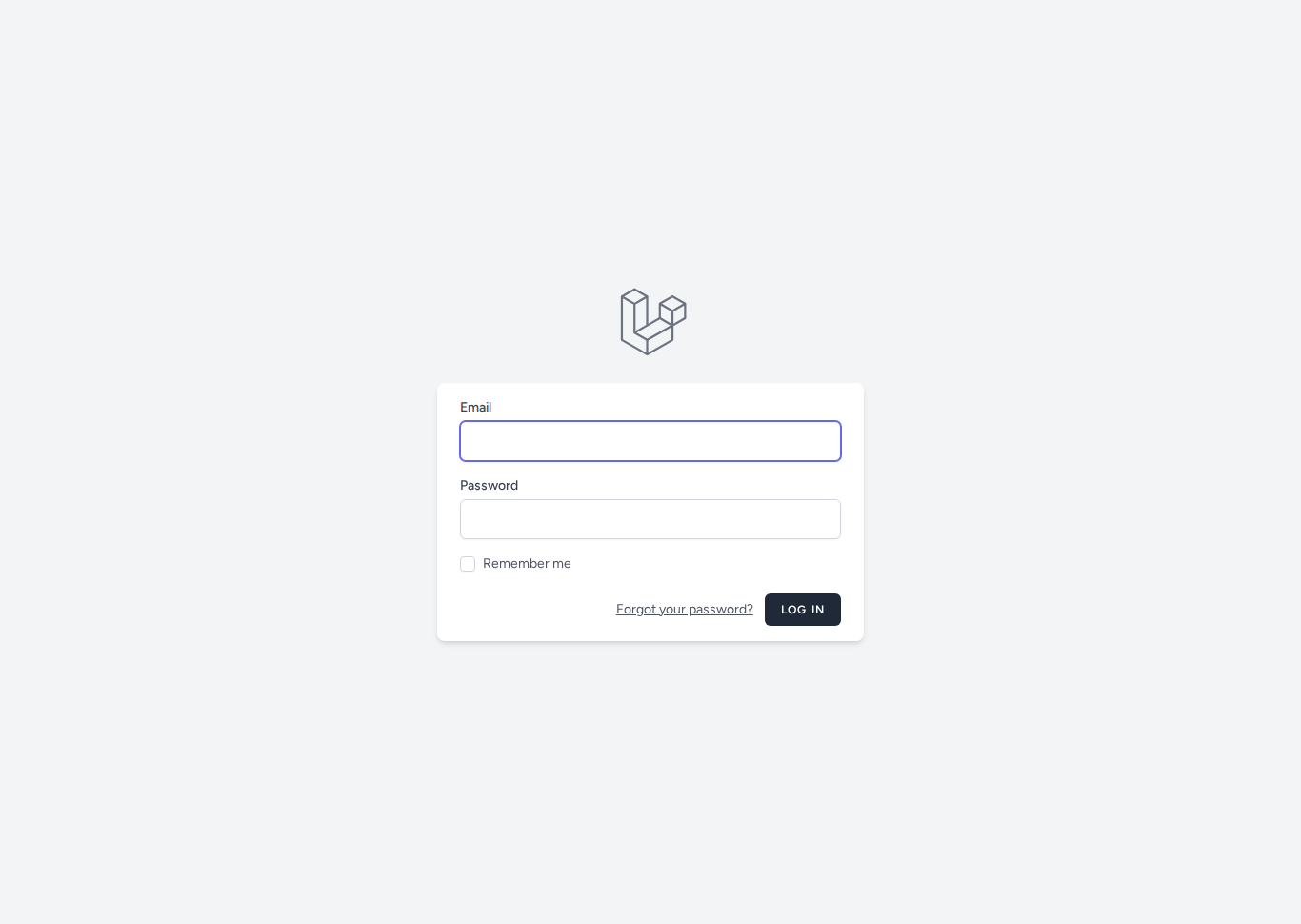 Original login screen ↗
Guest redirect → synthetic login → actual attendance table. All tests ran on a loopback-only server.
View verification record ↗This is the original application UI with a temporary synthetic database, not an external production deployment. No real employee records or credentials were used.
Employee attendance involves more than a check-in button. I built application components for recording attendance, working with employee permissions and exposing reports through a Laravel web interface.
The repository connects web routes, controllers, request validation and database migrations. Attendance records include timestamps, location and photo fields; permission workflows are modeled separately.
Workflow overview based on the linked implementation.
Inspect the Laravel controllers, routes and database schema at the revision shown here. The links expose the implementation behind the application.
routes/web.phpMaps attendance, permission, employee and reporting endpoints and applies authentication middleware to selected employee routes.
app/Http/Controllers/AttendanceController.phpContains photo/location input validation, check-in/check-out flow, date filtering and PDF-oriented reporting methods.
app/Http/Controllers/PermissionController.phpHandles employee permission submissions and a status-update path with request validation.
database/migrations/2024_06_27_091646_create_attendances_table.phpShows date/time, status, location and photo columns used to represent records in the database.
tests/Feature/ExampleTest.phpIncludes a foundational Laravel feature smoke test, providing a starting point for deeper workflow and authorization tests.
Laravel application prototype with public source and a basic framework smoke test. Production deployment would include targeted workflow tests and a complete role/authorization review.