02 / CONTROLLED EXECUTION
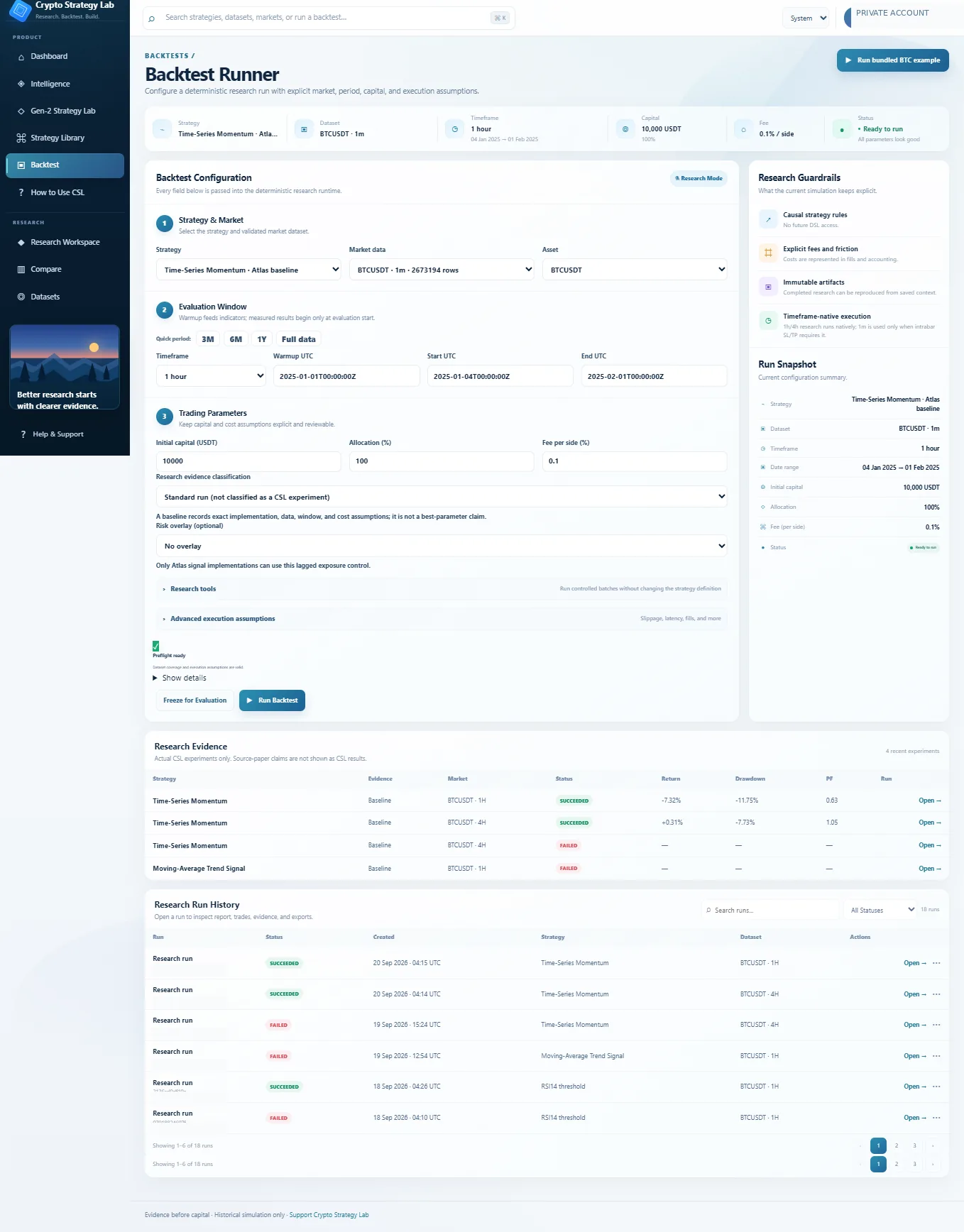
Backtest Runner
Market, period, sizing and friction are explicit before a historical run begins.
From a market-data catalog to controlled historical runs and reviewable results. This case study presents the interface, engineering decisions, and delivered software capabilities behind a local research system.
Five authentic screenshots from the BacktestApp application, with only account identity, run identifiers and selected trade details obscured. The visible UI and historical research screens are from the original software—not recreated mockups.
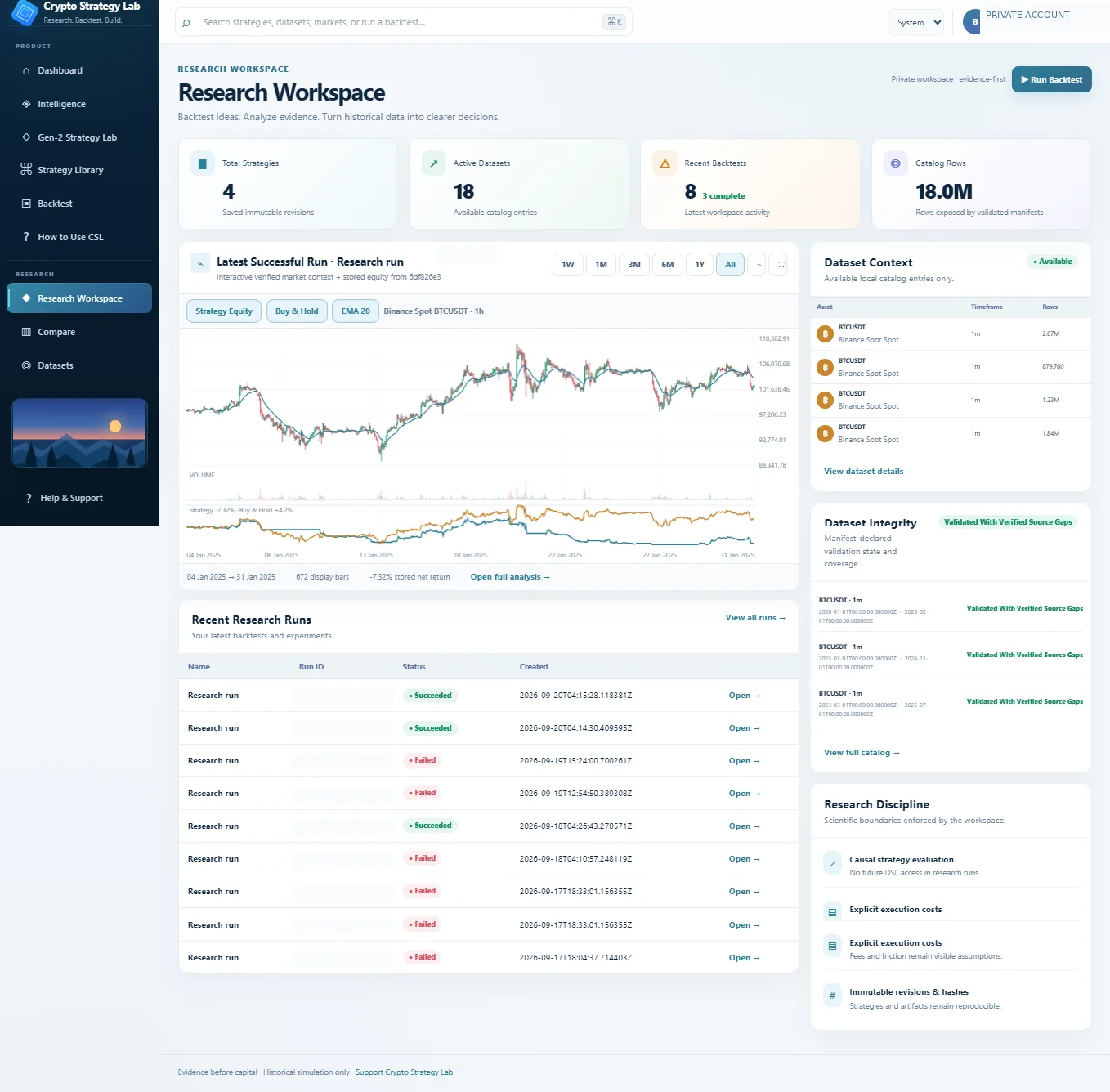 AUTHENTIC APPLICATION CAPTURE View full size ↗
Data context, recent execution history and evidence-first research monitoring.
Market, period, sizing and friction are explicit before a historical run begins.
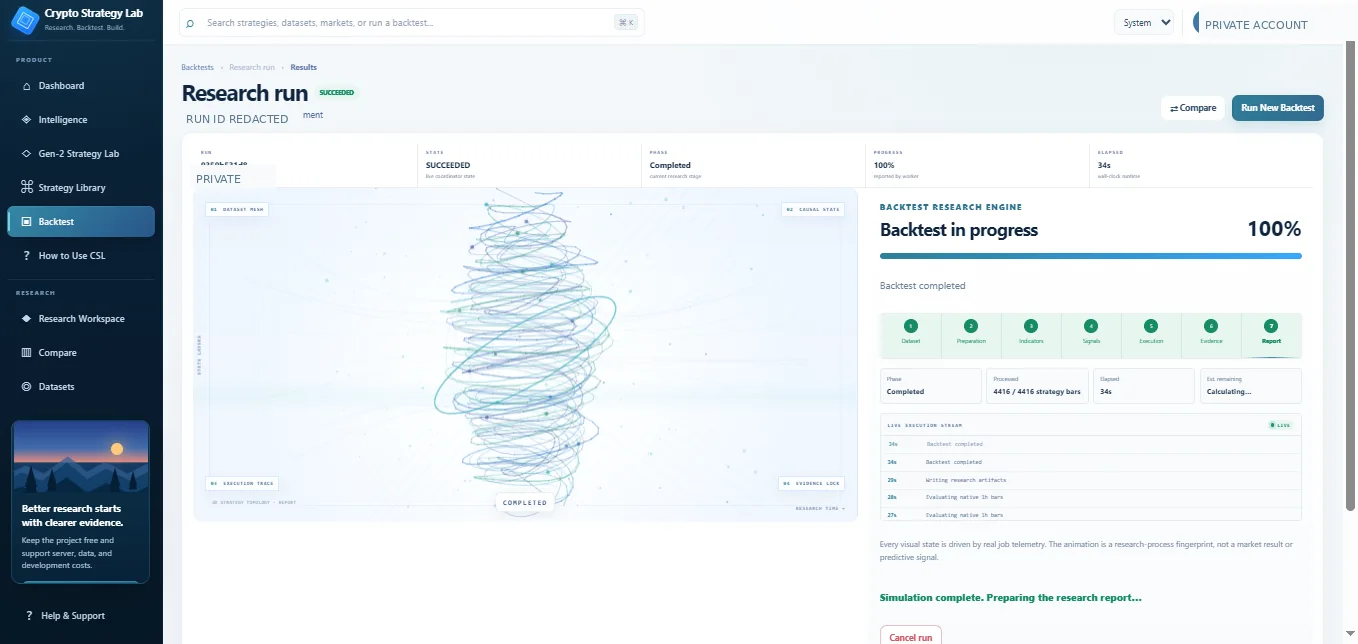
Visible progress, phase transitions, and report-oriented research workflow.
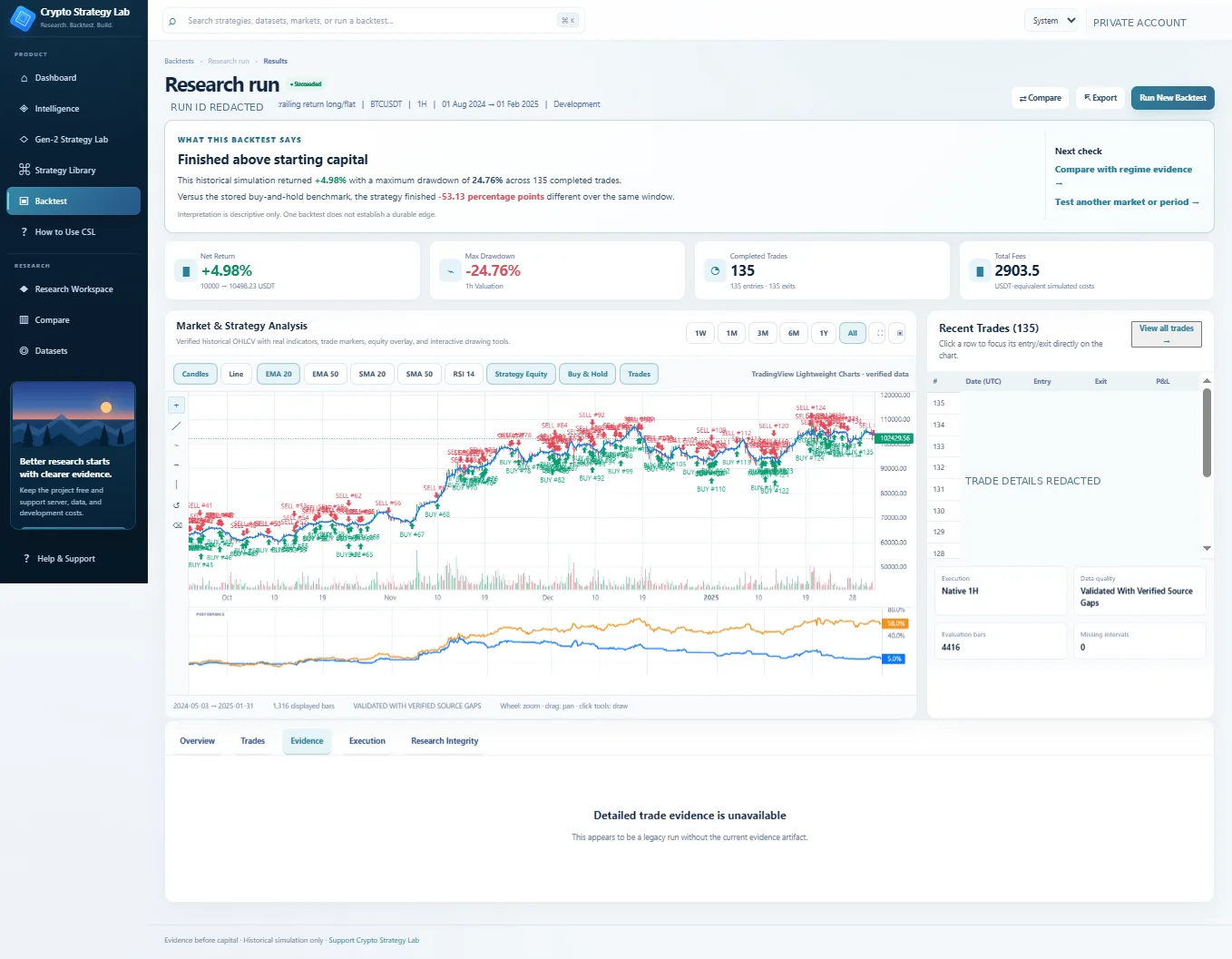
Actual results screen with equity, drawdown, modeled fees and a recorded trade count. Its legacy evidence tab explicitly marks detailed evidence as unavailable for that historical run.
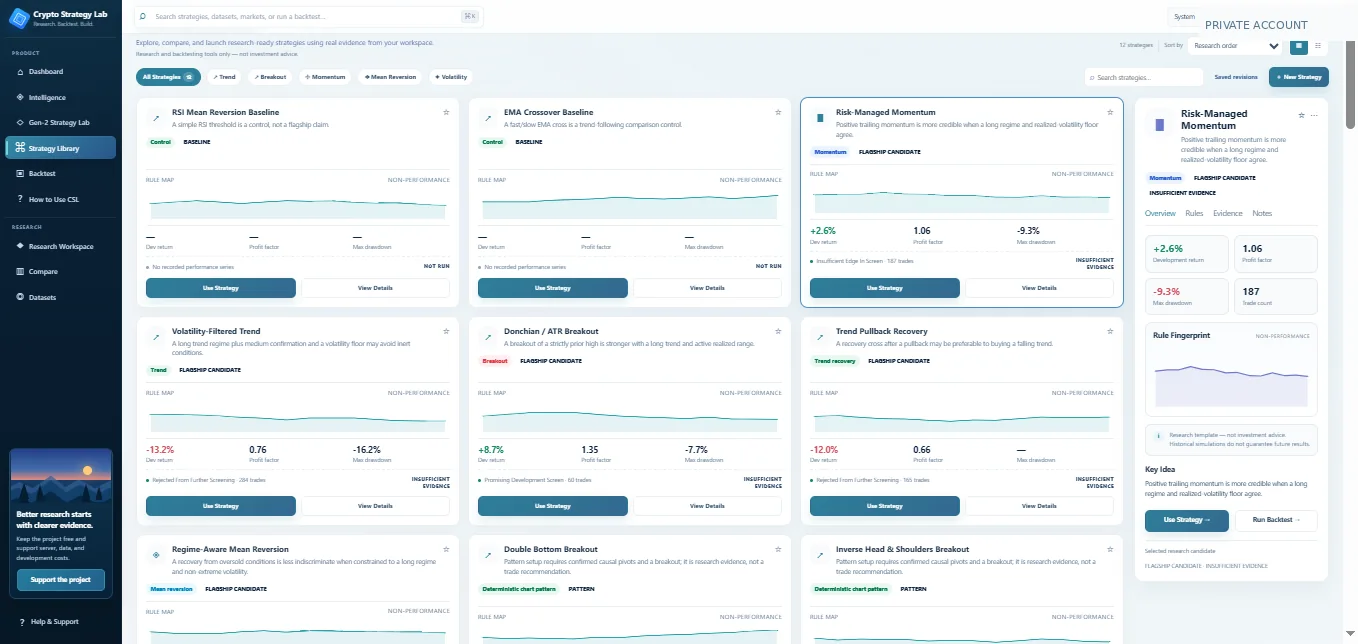
Versioned ideas, baseline comparisons, and evidence status—not unverified rankings.
These are five original BacktestApp captures supplied by the project owner, not generative redesigns. Private account labels, run identifiers and transaction details are covered with opaque masks. The remaining software UI, visible metrics and historical research charts are preserved. These are retained historical simulation screens, not claims of live trading. Each screenshot opens at its original resolution. Verify the five published asset hashes ↗
Imported histories are evaluated under explicit source, chronology and coverage rules.
Closed observation timing and deterministic replay reduce ambiguity in historical decisions.
Execution, fees and portfolio state are reconcilable instead of being inferred from a chart alone.
Run history, configuration and result interpretation support structured technical inspection.
The publication documents system architecture, causal execution discipline, a reproducible synthetic accounting example and selected verification evidence. The proprietary mechanism stays private.